ESG Bidding Risks Sinking Profits? AI Estimating and Quoting for Contractors Ensures Compliant Scaling
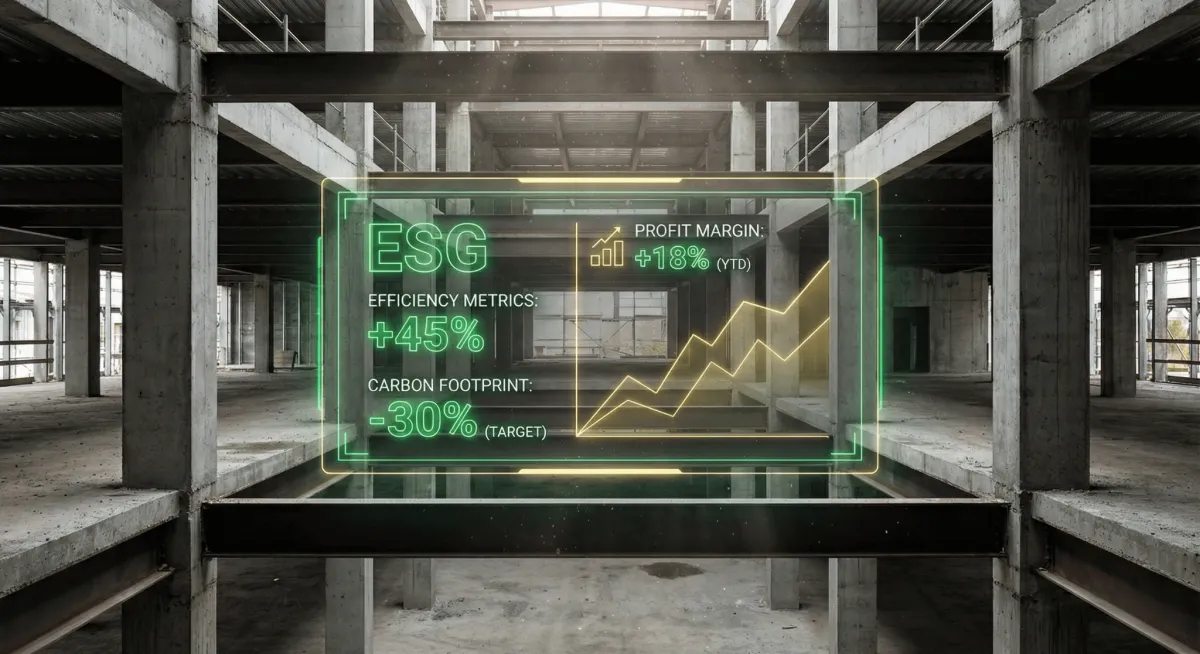
Contractors running $1M+ operations face a brutal reality: construction productivity growth averages only 1% annually while the global economy grows at 2.8%, according to McKinsey research. ESG compliance requirements now add another layer of complexity that threatens already thin margins. A commercial firm owner captured the frustration perfectly: "For our enterprise clients, ESG is non-negotiable now. It's eroding margins on big jobs." What if the real problem isn't ESG compliance itself, but the manual systems contractors are using to manage it?
The Hidden Profit Drain: Why ESG Mandates Are Killing Contractor Margins
Minnesota service businesses and contractors nationwide are discovering that ESG compliance functions as an invisible tax on every bid. With buildings responsible for 37% of global CO2 emissions according to the World Economic Forum, enterprise clients now demand comprehensive sustainability documentation before awarding contracts.
What's driving this margin compression?
Carbon tracking mandates that require documentation of supply chain emissions
Sustainable material sourcing verification across multiple vendors
LEED or ISO certification prerequisites that demand proof of green compliance
Supply chain transparency requirements that expose hidden costs
A construction manager from a high-volume operation described the math with surgical precision: "In our $1M+ projects, ESG volatility means bids go wrong fast." Consider a typical scenario: A mid-sized commercial firm bidding on a $5M hospital project reported that ESG reporting alone added 20% to estimating time. That's time spent on documentation rather than revenue generation, creating exposure to non-compliance penalties that could eliminate profit entirely.
But here's the question most contractors aren't asking: Is the problem ESG compliance, or is it the fact that your estimating system was built for a pre-ESG world?
Deloitte research on sustainable construction emphasizes that ESG compliance now requires end-to-end sourcing capabilities that traditional estimating methods simply can't handle at scale. The risks multiply for contractors managing multiple crews across projects. One contractor shared their experience: "We're bidding on a $5M+ hospital project, but ESG reporting added 20% to our estimating time. Non-compliance fines could sink us."
Miss one emissions calculation or sustainability certification requirement, and you're facing either margin-crushing rework or lost contracts. An executive from a $10M+ revenue company explained, "ESG risks are sinking our win rates on urban developments. We're losing profits to reworks."
What if the solution isn't working harder on compliance, but working smarter with systems that handle it automatically?
AI Estimating and Quoting for Contractors: Automating Compliance Without Killing Profitability
The contractors protecting their margins aren't fighting ESG compliance. They're using ai estimating and quoting for contractors that treat compliance as a built-in feature rather than a manual burden.
Here's what separates these systems from traditional estimating software: They don't just calculate costs. They validate compliance requirements in real time, flag missing certifications before bids go out, and integrate sustainability data automatically.
A civil engineer from a large firm asked the right question: "How can AI quoting handle ESG compliance without killing efficiency?" The answer lies in how these systems restructure the bidding workflow.
Traditional process: Estimator creates bid → Reviews ESG requirements manually → Chases down sustainability certifications → Adjusts pricing → Discovers missed requirements during review → Starts over.
AI-powered process: System flags ESG requirements upfront based on project type → Pulls real-time data on material sustainability ratings → Auto-calculates carbon footprint implications → Validates certifications against LEED/ISO standards → Generates compliant bid.
According to Construction Today's analysis, AI adoption in construction is accelerating specifically because it addresses the automation gap that manual processes can't fill at an enterprise scale.
But here's the deeper question: How much is manual compliance costing you in lost opportunities?
Think about the bids you didn't submit because ESG requirements seemed too complex. Think about the projects where you padded pricing by 15-20% just to cover compliance uncertainty. AI workflow automation for contractors eliminates that guesswork by building compliance checkpoints directly into your quoting process.
The World Economic Forum projects that green building could open a $1.8 trillion global market opportunity by 2030, but implementation requires more than just software. It requires rethinking how your entire bid-to-close workflow operates.
This is where ai follow up automation for contractors complements estimating. A compliant quote means nothing if it sits unanswered in a client's inbox for three days while you're on job sites. AI systems that handle post-quote follow-up automatically can increase quote-to-close rates while your team focuses on project delivery.
What would change in your business if every quote went out with perfect ESG compliance and every prospect received immediate, professional follow-up?
Building a Scalable System: Implementation Without Operational Chaos
Contractors often resist new systems because implementation means short-term disruption. But what if the real disruption is watching competitors win bids because they can quote faster and more accurately?
The implementation path for ai project manager for construction company systems that include estimating typically follows this sequence:
Phase 1: Data Integration
Your existing project data, material costs, and vendor certifications feed into the AI system. This isn't about replacing your knowledge. It's about making that knowledge scalable. A construction business coach would call this "systematizing your expertise."
Phase 2: Workflow Mapping
The system learns your quoting process, from initial client inquiry through final bid submission. It identifies bottlenecks where ESG compliance typically slows things down. For Minneapolis and Cambridge contractors, this often reveals that material sourcing verification creates the biggest delays.
Phase 3: Automated Compliance Checks
Once trained, the system validates ESG requirements automatically. Need to verify that your concrete supplier meets carbon reduction targets for a LEED Gold project? The AI pulls current certification data rather than requiring phone calls and email chains.
Phase 4: Predictive Adjustments
Advanced systems analyze historical bid data to predict where ESG compliance costs typically exceed initial estimates. This prevents the underbidding trap that sinks profits on major projects.
But here's the question that separates contractors who scale from those who stagnate: Are you willing to invest in systems now that will multiply your capacity later?
Industry discussions confirm this mindset shift: "For $1M+ firms, AI is key to scaling bids amid ESG pressures. It's about preventing profit sinks from green regulations." This isn't about technology for technology's sake. It's about protecting margins while meeting the compliance standards that enterprise clients now demand.
The data support this approach. Contractors implementing AI estimating report 30-50% reductions in bidding time while maintaining or improving accuracy. That efficiency directly translates to capacity: The same estimating team can handle more bids without sacrificing quality or compliance.
What's the cost of not implementing? Consider the opportunity cost of every bid you skip because ESG requirements seem too complex. Consider the margin erosion on projects where you overestimated compliance costs to avoid risk. Those aren't just operational inefficiencies anymore. They're competitive disadvantages.
Making AI Work for Your Values, Not Just Your Bottom Line
Technology implementation without ethical grounding creates its own problems. A kingdom business coach for contractors would ask: How do you implement AI systems in a way that aligns with your values while protecting your business?
After three decades in Minnesota construction, starting his first company at 18, Jason Trester has watched contractors struggle with the same pattern: They grow until administrative complexity stops them cold. His work at Kingdom Coaching focuses on deploying AI systems that reclaim 10+ hours of admin time per week, helping construction companies increase quote-to-close rates by an average of 40%.
The difference between AI that serves your business and AI that controls it comes down to implementation philosophy. Systems should build on your team's expertise, not replace human judgment on complex projects. ESG compliance is technical, but project relationships are human. The goal is to automate the technical compliance tracking so your team has more time for client relationships and quality delivery.
This matters for contractors managing HVAC, plumbing, and electrical projects across multiple job sites. When AI workflow automation for contractors handles bid compliance and follow-up scheduling, project managers can focus on what actually drives client satisfaction: solving problems, managing quality, and delivering on time.
Is your current system giving you that freedom, or are you still drowning in spreadsheets and manual follow-up?
The construction industry is reaching an inflection point. ESG requirements aren't going away. They're becoming more complex as climate regulations tighten and enterprise clients demand greater sustainability transparency. Contractors who treat this as a compliance burden will watch margins shrink. Contractors who treat it as an opportunity to systematize and scale will pull ahead.
What side of that divide will your business be on?
Ready to protect your margins while scaling compliant bids? Book a Commercial Contractor Diagnostic to see how AI estimating can work for your $1M+ operation: https://links.kingdomcoaching.pro/widget/bookings/30min-discovery-call-
Prefer to talk? Call or text 763-373-4478.